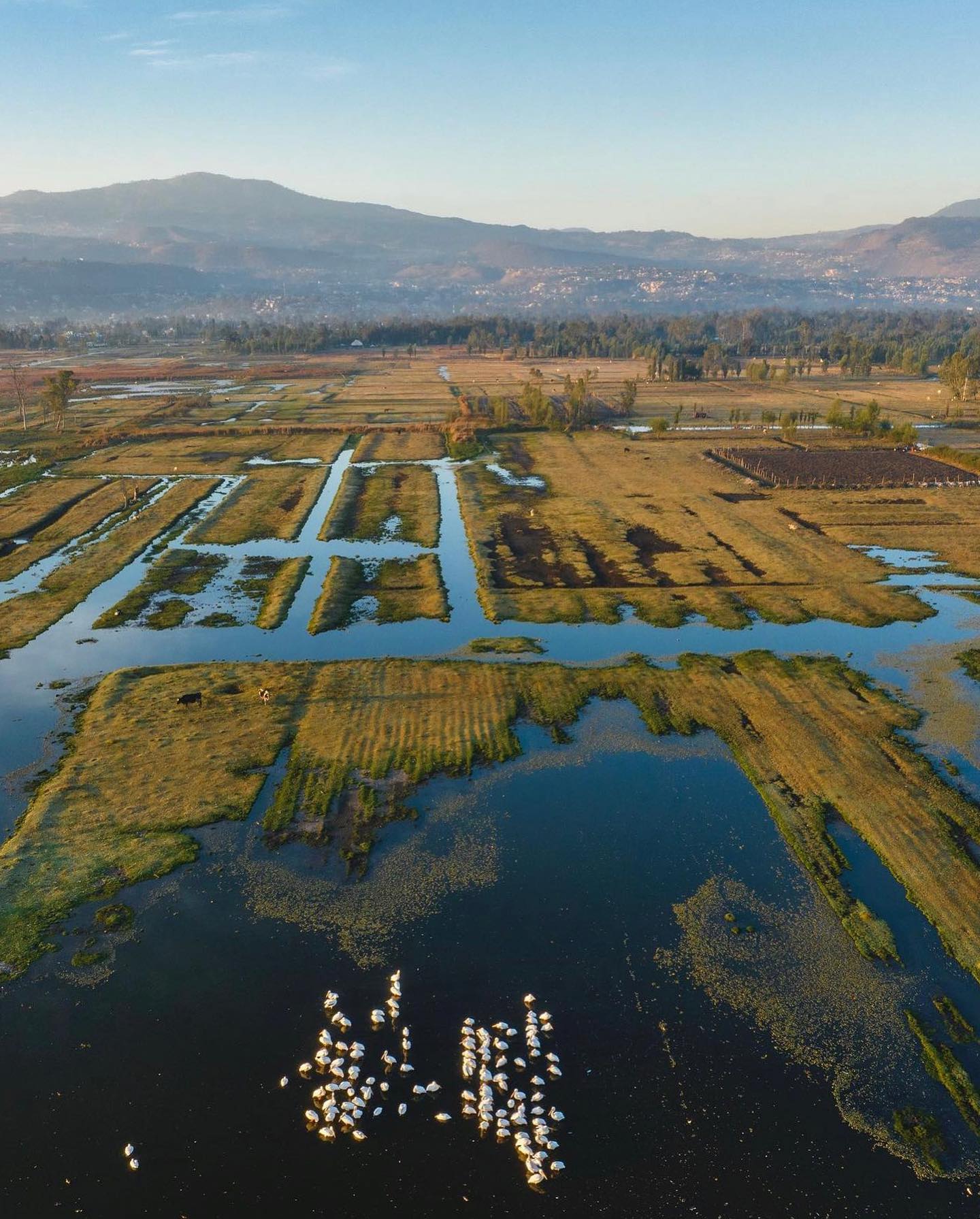

When we paddle Xochimilco’s canals at sunrise, the first thing you notice isn’t a wide open channel — it’s a narrow lane of water with solid land on both sides, then another lane, then another. This isn’t just any canal: you’re moving between chinampas, strips of land built by hand on what used to be open lake, long before Mexico City existed as we know it today.
Land that’s built, not found
A chinampa isn’t a piece of land that was simply there — it’s land someone raised, layer by layer, on the bed of a lake, with sediment, branches, and mud stacked until the plot sits firm and above the waterline. Ahuejotes, a type of willow, are planted along the edges; their roots hold the whole thing together and keep the banks from washing away. They don’t float, even if the “floating gardens” story sounds better — it’s real land, solid enough to farm every day of the year.
Why the layout matters more than the view
The canals separating one chinampa from the next aren’t there for looks: they’re the space deliberately left open so a canoe loaded with harvest could move from one plot to another. Those same canals — not a replica, not a setup for tourists — are the ones we paddle today at sunrise. Kayaking through Xochimilco means moving through the same water lanes that already existed when this place was, literally, the city’s pantry.
Working farmland, not a monument
For centuries, a large share of what people in this basin ate came straight from here: corn, chili peppers, flowers, and vegetables, grown on land reclaimed from water, with no tractors or industrial fertilizer. That production record is exactly what the FAO now recognizes as a globally important agricultural system, and what UNESCO lists as a World Heritage site — not for being pretty, but because it’s still active farmland, worked daily, not a monument behind glass.
What you actually see paddling at dawn
We always go out at sunrise, and it’s not just about the light: at that hour the canals are nearly empty, no engines or trajineras, and you paddle with Mexico City waking up in the background while moving through a landscape of water and land that probably looked much the same centuries ago. On the Sunrise Basic tour, we also stop for breakfast on a real chinampa that’s still in production — not a replica staged for photos.
If you want to see it for yourself, book your sunrise kayak tour, or read first about kayak vs. trajinera in Xochimilco if you haven’t decided how to explore the canals yet.