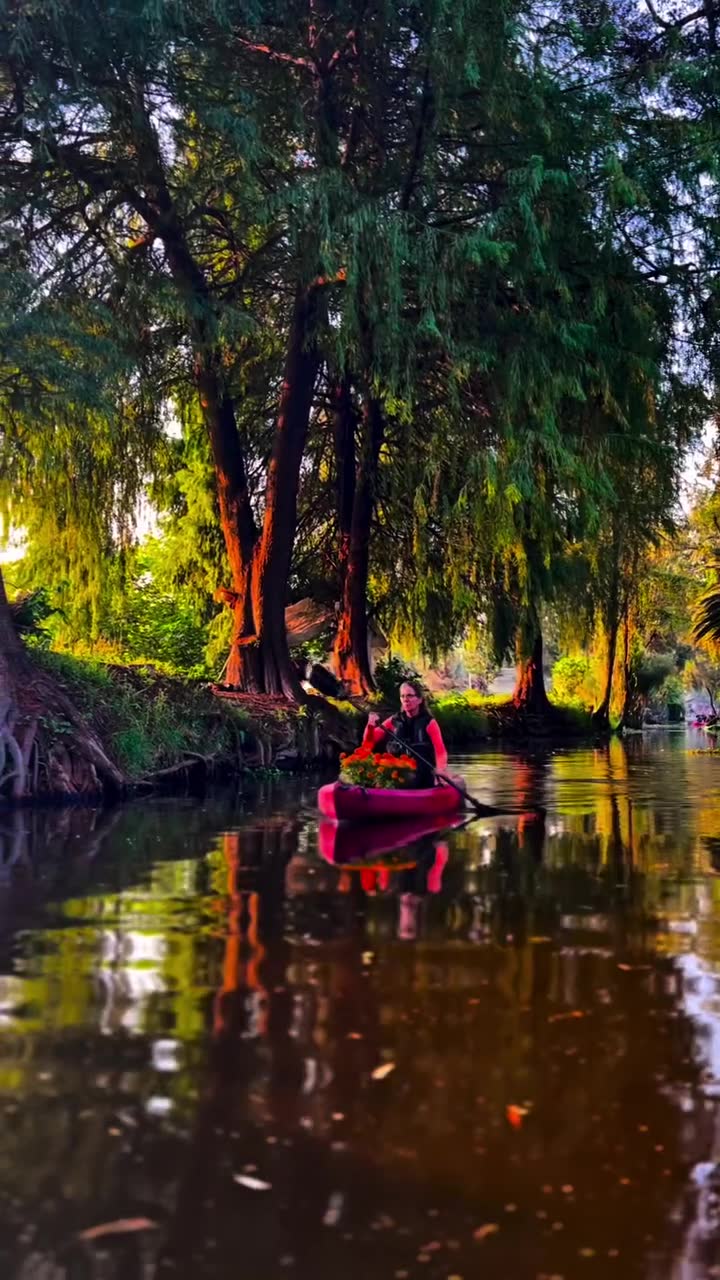

We filmed this while paddling one of Xochimilco’s canals: a canoe loaded with freshly cut cempasúchil marigolds, late afternoon light filtering through the ahuejote trees, the canal nearly silent. This isn’t a scene staged for the camera — it’s simply what this place looks like this time of year, when this flower is everywhere.
What cempasúchil actually is
Cempasúchil (Tagetes erecta) is a flower in the daisy family, with the recognizable orange and yellow petals and the strong, distinctive scent many people immediately associate with Día de Muertos. The name comes from the Nahuatl cempohualxochitl, “the flower of twenty petals” — even though it actually has quite a few more than twenty. It was already used in funerary ceremonies in this part of the Valley of Mexico long before the Spanish arrived, so this isn’t a recent tradition or something dreamed up for tourists.
Why it’s grown right here
A large share of the cempasúchil sold in Mexico City every October and November comes from Xochimilco, grown directly on the chinampas — the same plots of land built on water that we wrote about in our post on the chinampas. Chinamperos plant the seed in the middle of the year, timed so it blooms right before November 1st and 2nd, and a good part of that harvest is still moved from one chinampa to another by canoe, exactly like in the video above — not out of nostalgia, but because it’s still the most practical way to get flowers out of plots surrounded by water on every side.
Why this flower and not another
Tradition says its intense color and scent are exactly what guides souls back home during those two nights — that’s why petals are scattered from the street to the altar, and why the altar itself is decorated with them. It isn’t just seasonal decoration: for a lot of people in this area, it’s still a real part of how they remember family.
How we experience it
For us, paddling around this time of year means passing canoes just like the one in the video, loaded with freshly cut flowers, and seeing the banks of several chinampas painted orange. If you come paddle with us in October or the first days of November, it’s peak cempasúchil season — we can’t promise you’ll cross paths with a loaded canoe like the one in the video, but you will see the chinampas in bloom.
If you want to experience it for yourself, book your sunrise kayak tour, or read first about how the chinampas you’ll be paddling through were built to get more context on the landscape before you come.